Understanding CFD: How Virtual Fluid Simulations Solve Complex Spray Challenges
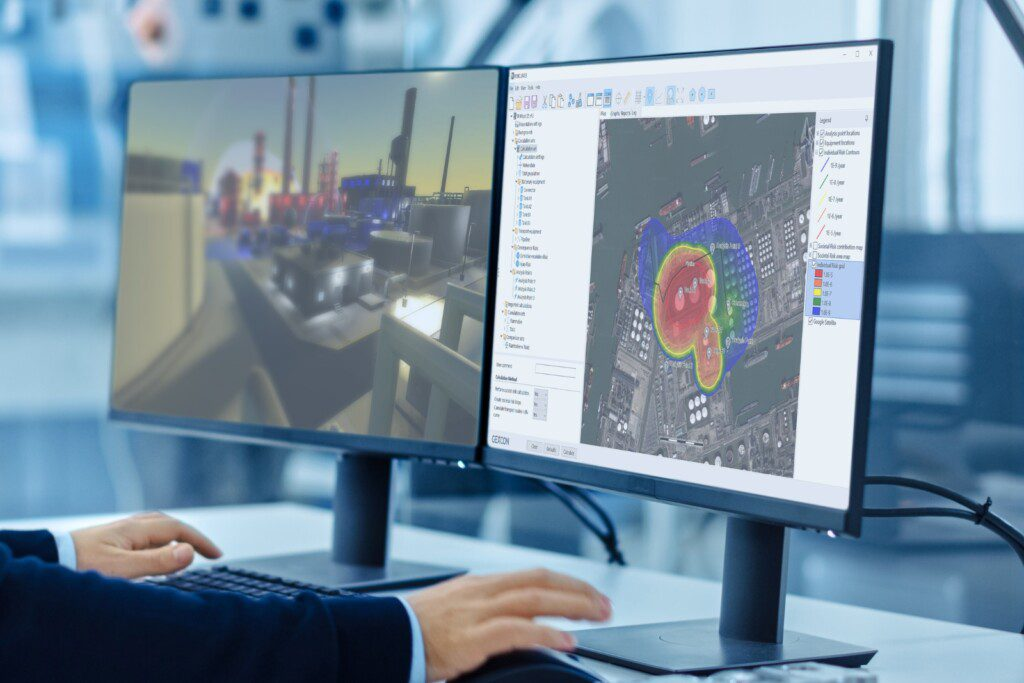
Solving complex spray-related challenges, improving system performance, and discovering more efficient application methods are ongoing goals across many industries. In most situations, highly technical spray questions can be answered through controlled testing in advanced laboratory environments designed to replicate real-world conditions. For instance, when exploring how to effectively coat a new type of biodegradable packaging with a safe and consistent mixture, engineers can recreate exact operating conditions and determine the most suitable nozzle configuration through hands-on experimentation. These controlled tests provide valuable insights and often lead to precise, reliable solutions.
However, there are situations where physical testing simply is not feasible or practical. Some spray systems operate in environments that are too extreme, complex, or hazardous to replicate in a laboratory setting. For example, a nozzle installed inside a chemical processing tower may be exposed to conditions that cannot be safely reproduced. In other cases, the materials involved may be dangerous to handle, making real-world testing unsafe. There are also scenarios where testing becomes prohibitively expensive or unrealistic, especially when multiple variables must be explored simultaneously. In such cases, a different approach is required—one that allows for safe, flexible, and detailed analysis without physical limitations. This is where virtual simulation using CFD software becomes an essential tool.
What is CFD?
Computational Fluid Dynamics, commonly referred to as CFD, is a specialized area of fluid mechanics that uses numerical methods and algorithms to analyze and solve problems involving fluid flow. While the technical definition may sound complex, the concept itself is straightforward when viewed in practical terms. CFD software uses computer-based models to simulate how liquids and gases behave under specific conditions, allowing engineers to visualize processes that would otherwise be difficult or impossible to observe directly.
In essence, CFD acts as a digital testing environment. By inputting key data about a spray system, such as flow rates, pressure, temperature, and geometry, the software generates detailed visual representations of how the system operates. These simulations make it possible to study fluid behavior, identify inefficiencies, and test potential improvements without physically altering the system. Over time, the accuracy of these simulations has improved significantly due to advancements in computing power, sophisticated programming techniques, and the integration of extensive experimental data. This combination allows CFD to provide highly reliable insights that support better decision-making and system optimization.
Who uses CFD?
CFD is widely used across a diverse range of industries and research fields, particularly in areas where fluid behavior plays a critical role in performance and safety. It is especially valuable in applications involving gas cooling and conditioning, chemical processing, spray drying, fluid mixing, and tank cleaning. In these environments, understanding how fluids move, interact, and respond to different conditions is essential for achieving efficiency and maintaining operational reliability.
What makes CFD particularly powerful is its ability to reveal what cannot be easily seen or measured in real-world conditions. Many systems operate in environments that are either too dangerous, too complex, or too unpredictable for direct observation. As a result, engineers and operators may not fully understand what is happening inside these systems. CFD provides a way to bridge that gap by offering clear, visual insights into fluid behavior, uncovering hidden issues, and highlighting opportunities for improvement. In many cases, organizations that adopt CFD discover more efficient, safer, and cost-effective ways to operate simply because they gain a deeper understanding of their processes.
Why does CFD matter?
The importance of CFD lies in its ability to transform uncertainty into clarity. Instead of relying solely on trial-and-error methods or limited physical testing, engineers can explore multiple scenarios in a virtual environment, reducing risk and saving both time and resources. CFD enables the evaluation of different designs, operating conditions, and configurations without interrupting real-world operations or exposing personnel to potential hazards.
Beyond problem-solving, CFD also encourages innovation. By allowing users to experiment with new ideas in a controlled digital space, it opens the door to discovering more efficient solutions and optimizing performance in ways that might not have been considered otherwise. Whether it is improving spray coverage, reducing waste, or enhancing system reliability, CFD provides the insights needed to make informed decisions with confidence.
In conclusion, Computational Fluid Dynamics has become an indispensable tool in modern engineering and process optimization. It offers a practical and powerful alternative when physical testing is limited or impossible, while also enhancing understanding in even the most complex environments. By combining data, simulation, and visualization, CFD not only solves existing challenges but also drives continuous improvement and innovation across industries.